Hosting an Ecosystem Expo: A Creative Way to Showcase Student Learning

Hosting an ecosystem expo is a great way for students to demonstrate what they have learned while inviting guests to your classroom to see what your students are learning. 


Ecosystem Expo

Time: 4-5 hours split into 4-5 days (45-60 minutes each). Students will create their exhibit on the first few days and on the last day students will show off their exhibit to the museum visitors.


Materials:

  • Trifolds, Boxes, Poster Paper
  • Scissors, gluesticks and coloring tools
  • A variety of supplies - use what you have available or let students bring items in from home


Steps:

  1. Students will work in partners or groups of 3.
  2. Students will create a poster, diorama or digital presentation to show:
  3. what their biome looks like
  4. the climate of the biome
  5. location of the biome
  6. labeled organisms
  7. A food web
  8. During the ecosystem expo students will show visitors their ecosystem, discuss the climate, organisms and how that ecosystem supports life. They should be prepared to verbally answer the following questions:
  9. how their biome supports organisms
  10. how organisms rely on each other
  11. how energy is moved through their biome
  12. how organisms would be impacted due  to changes to the ecosystem
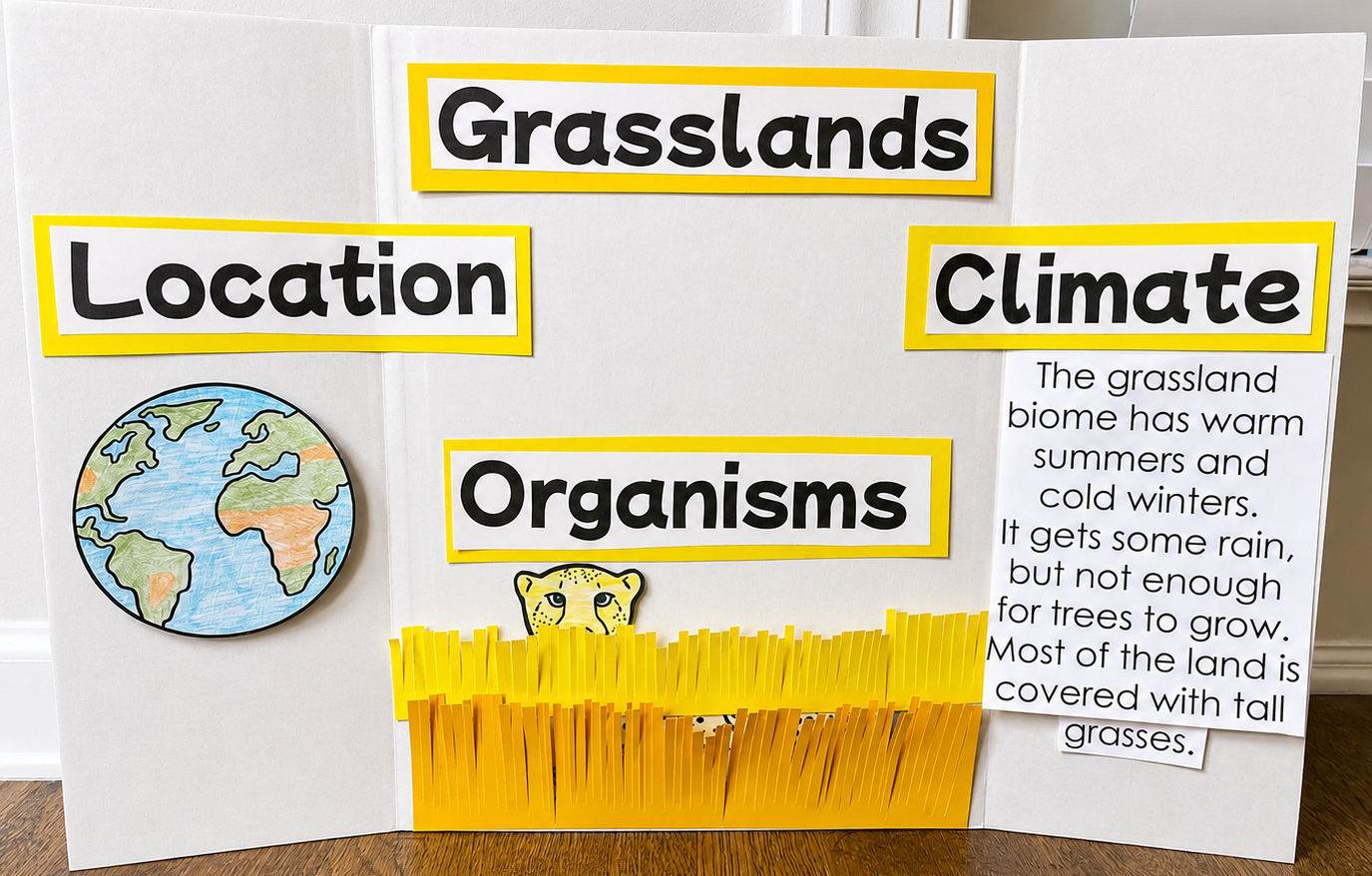
A trifold of the grasslands showing the location, the organisms and the climate.

FAQ

What do I need to have prepared for this ecosystem expo?

  1. Make sure you have a few materials available like poster paper, coloring tools, scissors and glue. You can allow students to bring items from home too.
  2. Decide how you want students to choose their ecosystem. Ideally, each group does a different biome and there are no repeats. However this will depend heavily on your class size. You can allow them to choose their own biome, you can choose their biome or you can make it completely random and use this wheel to determine what group will do what biome.
  3. Decide who you want to invite to this motion museum. You can invite families or you can just invite non homeroom staff members. You can also invite other grade levels. Younger students would love to visit an older class and see what projects they will get to work on when they are older.

What should visitors do during the ecosystem expo?


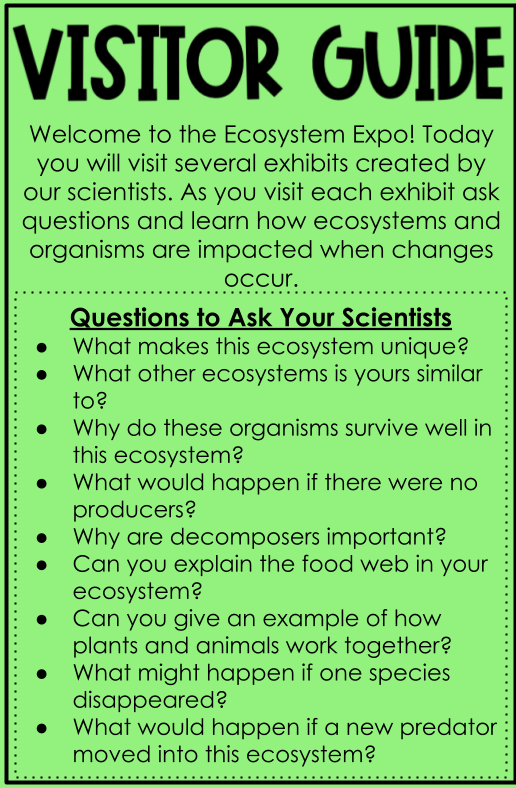
Visitors should visit each exhibit and see the students' work. Visitors can ask the presenters questions to help students understand and explain what they know about their biome. Give adults the visitor guide to provide them with questions they can ask the students. This part is where the magic happens, it shows if students really know and understand the concepts. 


What materials did you use?

Since students can just draw for this project, I didn’t provide many materials. I did provide posters and mini trifolds*. I also pulled out a few supplies I always have on hand like construction paper, yarn, coloring tools, glue sticks and scissors. Some students brought items from home like toy animals or cardboard boxes. 


I also offered to print pages for students in case they wanted to type something up and cut it out to put it on the board. I did put a limit on this. 1) They had it typed up and shared with me by the end of the second day and I would print no more than 5 pages per group.


  • We chose mini poster boards because students don't have to worry about trying to fill a lot of space which saves them time.
  • Saving Money & Materials Tip: If you have students write and draw their work on regular paper they can carefully tape their work on the poster board. Then it can be removed later and the poster boards can be reused for other projects later.


This project should require very little supplies, do not feel like you need to purchase any items we shared here. Look around the classroom and let students bring items home. You can get high quality projects by just looking around and being creative. We only linked the trifold posters because we use (and re-use) them often and thought it would be helpful if teachers needed ideas of what to provide. 


Forces and Interactions Lesson Plan Cover

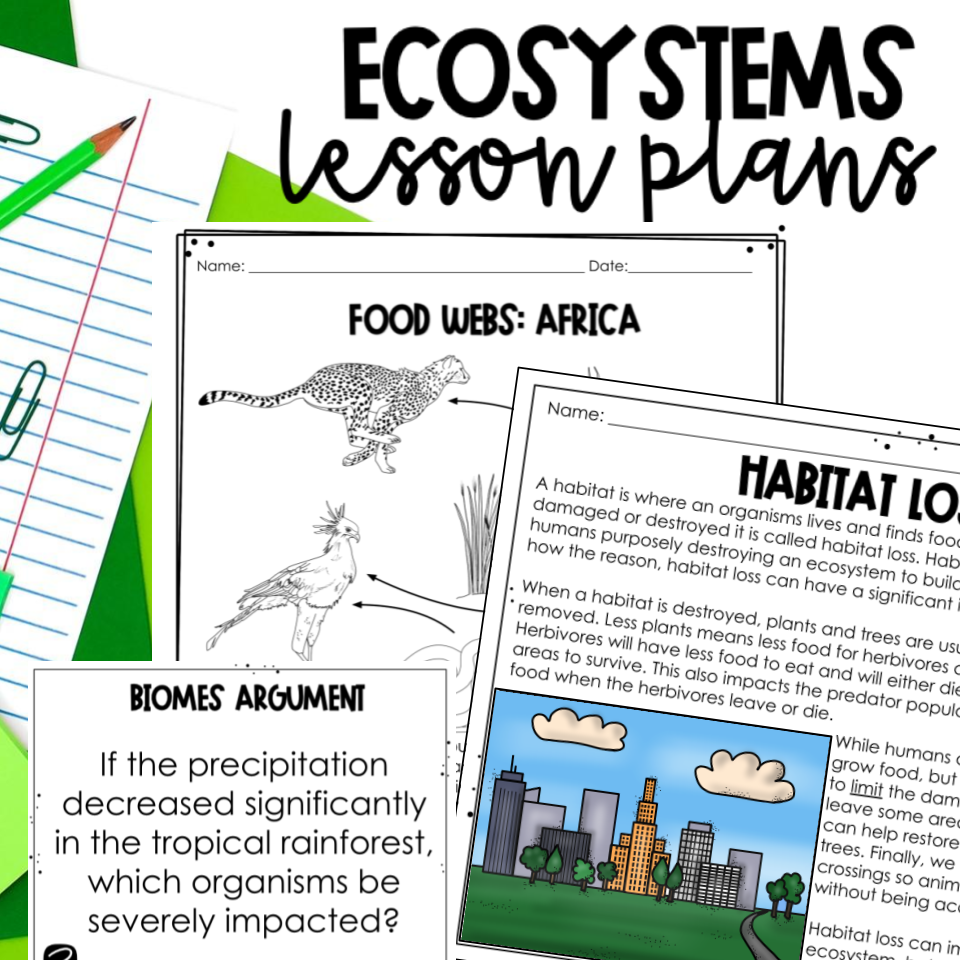
Looking for ready-to-use lessons on that? These activities are part of our 5th Grade Ecosystems Lesson Plans, which include detailed lesson plans, videos, informational texts, and many other activities to help students understand how organisms in an ecosystem interact. 


*As an Amazon Associate, we earn from qualifying purchases.

Student creating a human body systems poster using craft supplies to model organs and body systems d
July 12, 2026
Discover hands-on human body system projects that help students explore the skeletal, muscular, digestive, respiratory, and more using simple craft supplies.
Variety of balls used in a hands-on force and motion investigation exploring how mass affects an obj
July 6, 2026
Teach force and motion with hands-on science activities that explore how force strength and mass affect movement using simple materials.
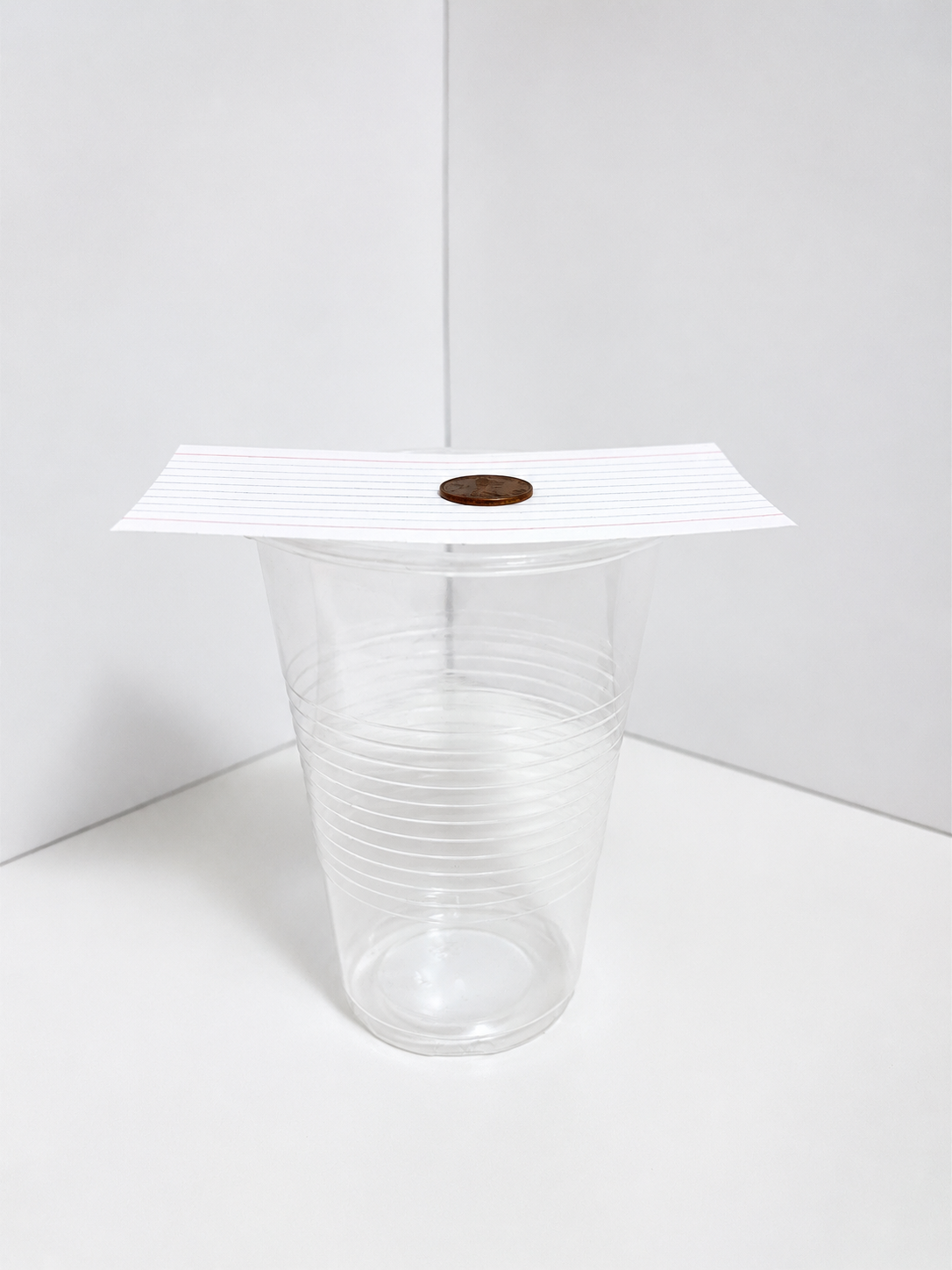
Coin resting on an index card over a plastic cup for a hands-on Newton's First Law of Motion
July 6, 2026
Teach Newton's Laws of Motion with quick, hands-on science activities using simple materials. Perfect for engaging elementary students.
paper airplane for activity demonstrating how air resistance affects flight
July 6, 2026
Teach air resistance with this no-prep science investigation! No materials required—just an engaging, hands-on activity for elementary students.
Students investigate gravity by testing how different ramp angles affect the motion of a toy monster
July 6, 2026
Teach gravity with two low-prep science investigations using everyday classroom materials. Perfect for engaging elementary students with hands-on learning.
See a student creating a Creature Family Project to demonstrate inherited and acquired traits.
July 2, 2026
Discover engaging projects for teaching inherited and acquired traits. Hands-on activities help students explore heredity through creative, standards-aligned learning.
June 30, 2026
Explore three hands-on shadow investigations that help students discover how shadows change throughout the day while building science observation skills.
Imageofastudentmakingamodelofthesolarsystem
June 30, 2026
Learn how to make a solar system model that helps students understand planet order, orbits, and key space science concepts through hands-on learning.
Studentsworkingonhexagonalthinkingstrategy
June 30, 2026
Discover the hexagonal thinking strategy and learn how it helps students make meaningful connections, build critical thinking, and deepen learning across subjects.
Students working in a classroom on reading skills.
June 20, 2026
Guess the Topic is a simple pre-reading activity that builds background knowledge, vocabulary, and curiosity while getting students talking before they read.