Hands-On Investigations for Teaching about Shadows

Shadows seem like such a simple concept to understand. But they still require hands on investigations to truly understand them.  Here are three hands-on investigations to help students understand how the Sun's position affects an object's shadow.


Materials:

  • Sidewalk chalk
  • Large object (ball, cone, chair, etc)
  • Handheld flashlight
  • Small object (gluestick, small toy, etc)


Investigation #1

Steps:

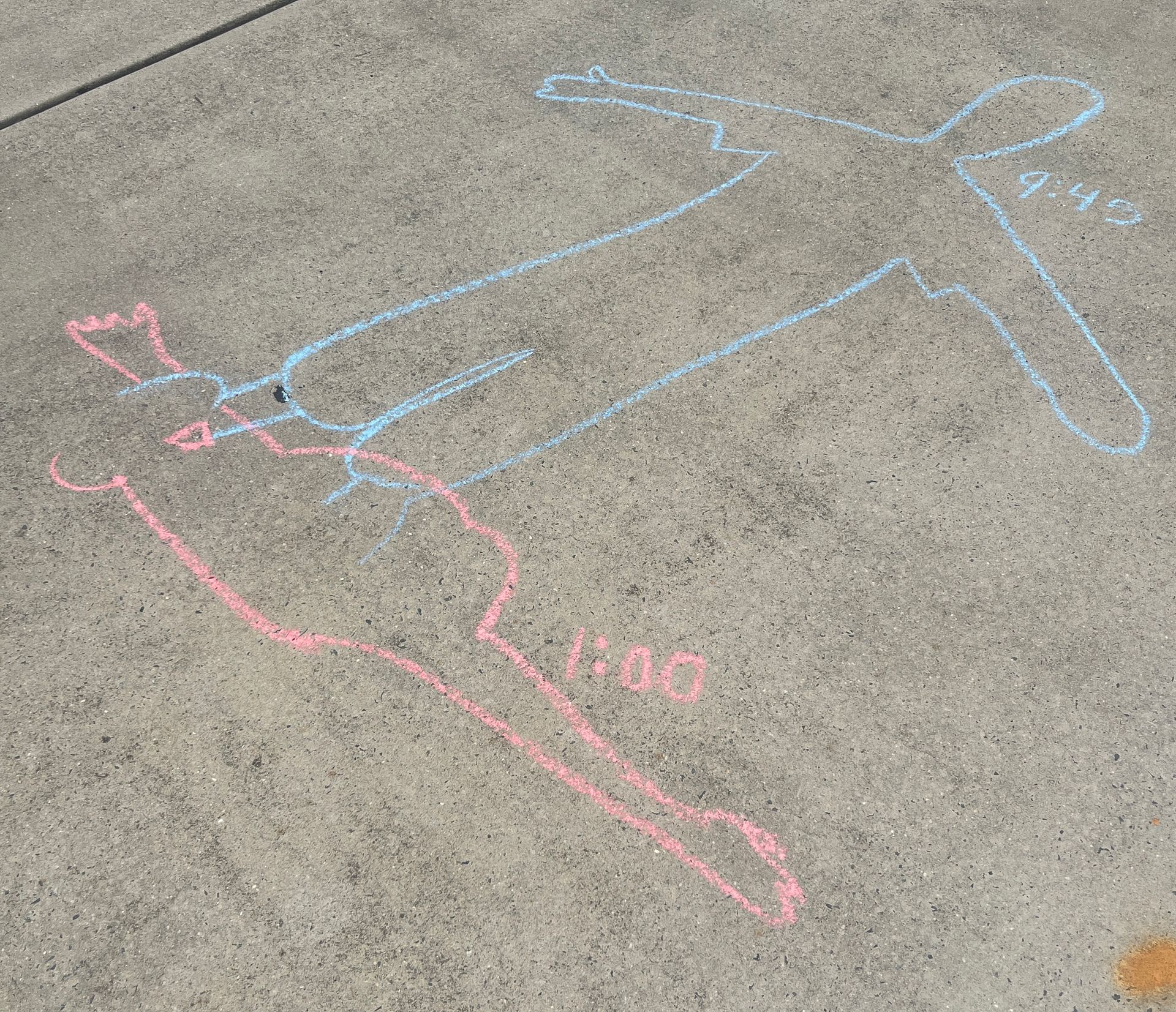
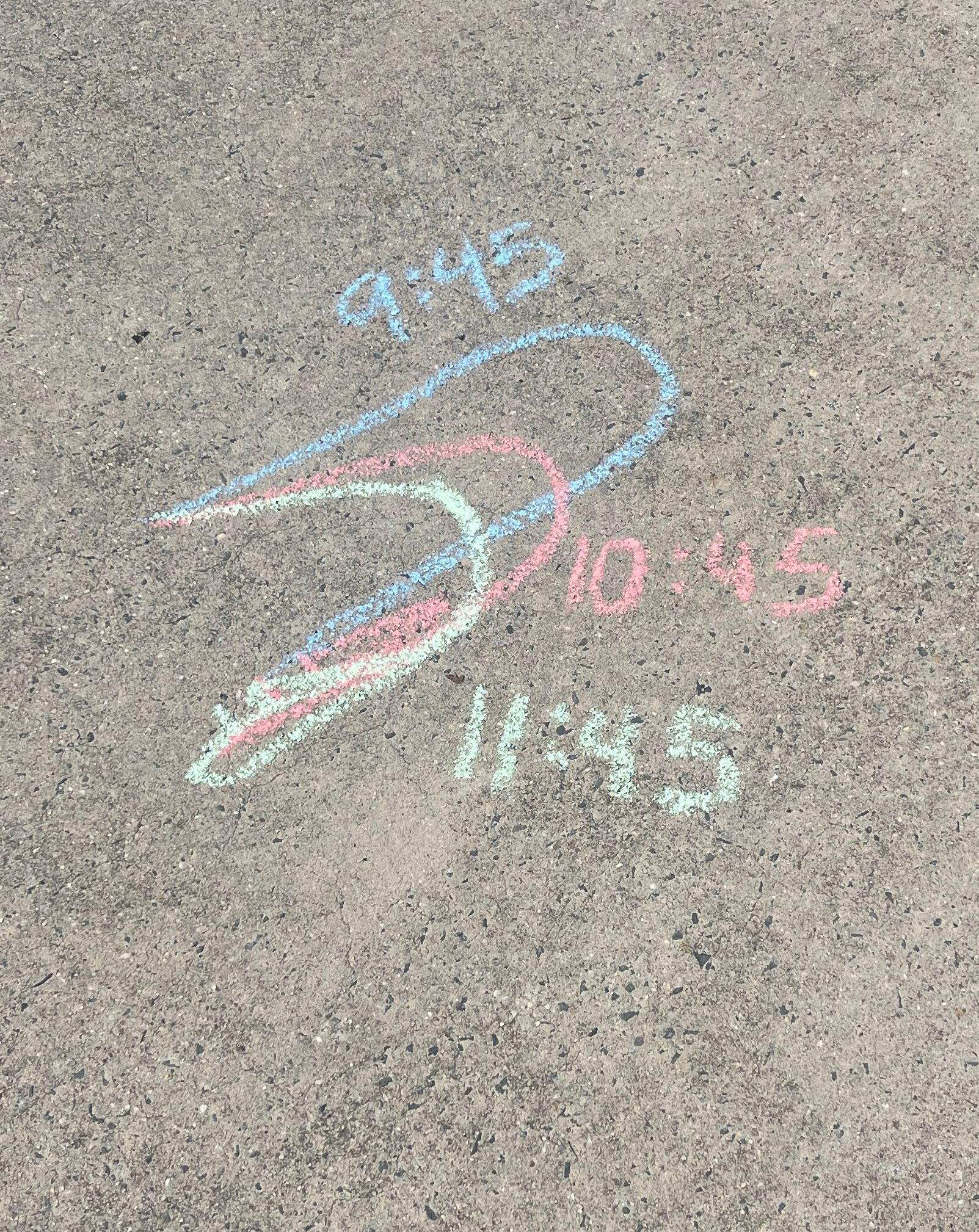
  1. Place a large object in full sun (ball, cone)
  2. Trace the object with sidewalk chalk and write down the time the tracing was done.
  3. Return to the drawing 1 hour later and trace the shadow again and label the time next to it. (It helps to use different colored chalk each time).
  4. Repeat these steps each hour as often as you can complete it during the school day.

Students will observe:

  • The shadow moves slightly each hour.
  • The shadow changes size each hour.
  • The shadow is the smallest at midday.
Investigation #2

Steps:

  1. Students will get in groups of two.
  2. One student will trace the body of the other student and label it with the time. 
  3. Students will return several hours later and retrace the same students shadow and label it with the time. 

Students will observe:

  • Their shadow does not fit into the same space from the first time.
  • Their shadow changes size and direction.


Investigation #3

Steps:

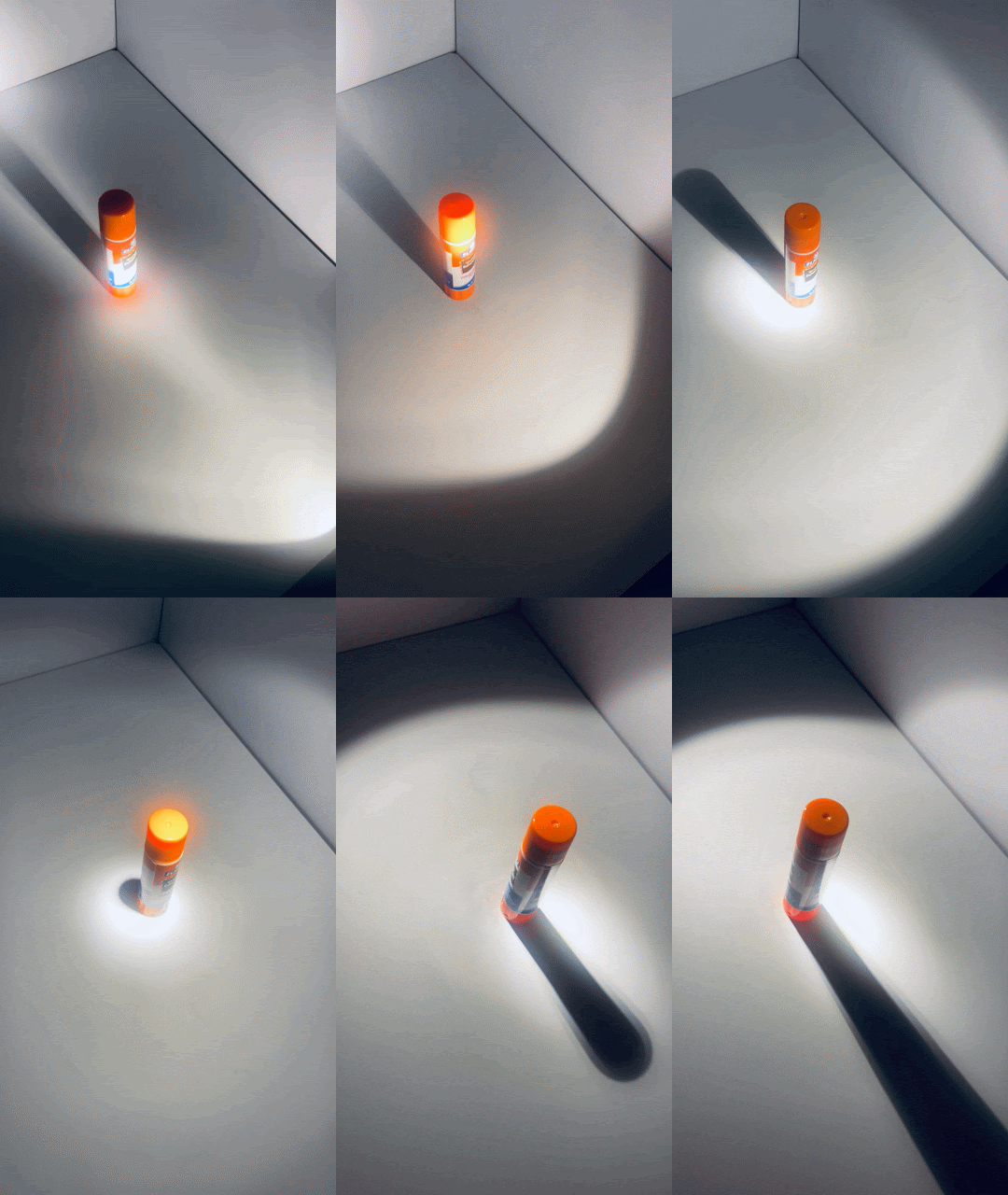
  1. Students will place a small object (toy, gluestick, etc) in front of them.
  2. The teacher will turn off the lights.
  3. Students will shine the flashlight from the right side of the object and slowly move it over the object and go to the left side (their light should follow an imaginary rainbow above the object. 

Students will observe:

  • As they move the flashlight the shadow changes size and direction.


FAQ

What materials did you use?

Feel free to substitute similar materials for the ones we've listed. We've also included links to products we've used and recommend if you'd like a starting point for gathering supplies.


What if it's cloudy or raining?

The sun is very important for investigations 1 & 2. Since you rely in the Sun moving, you can't do this in a classroom. If it’s rainy or cloudy, have students complete investigation 3 and try another day for the other two.


How can I make sure the shadow tracings stay preserved if multiple classes use the same playground?

We recommend you email your school the day before letting them know your plan and ask them to keep their students away. You may also want to draw a long line showing where your students' work starts and ends. 


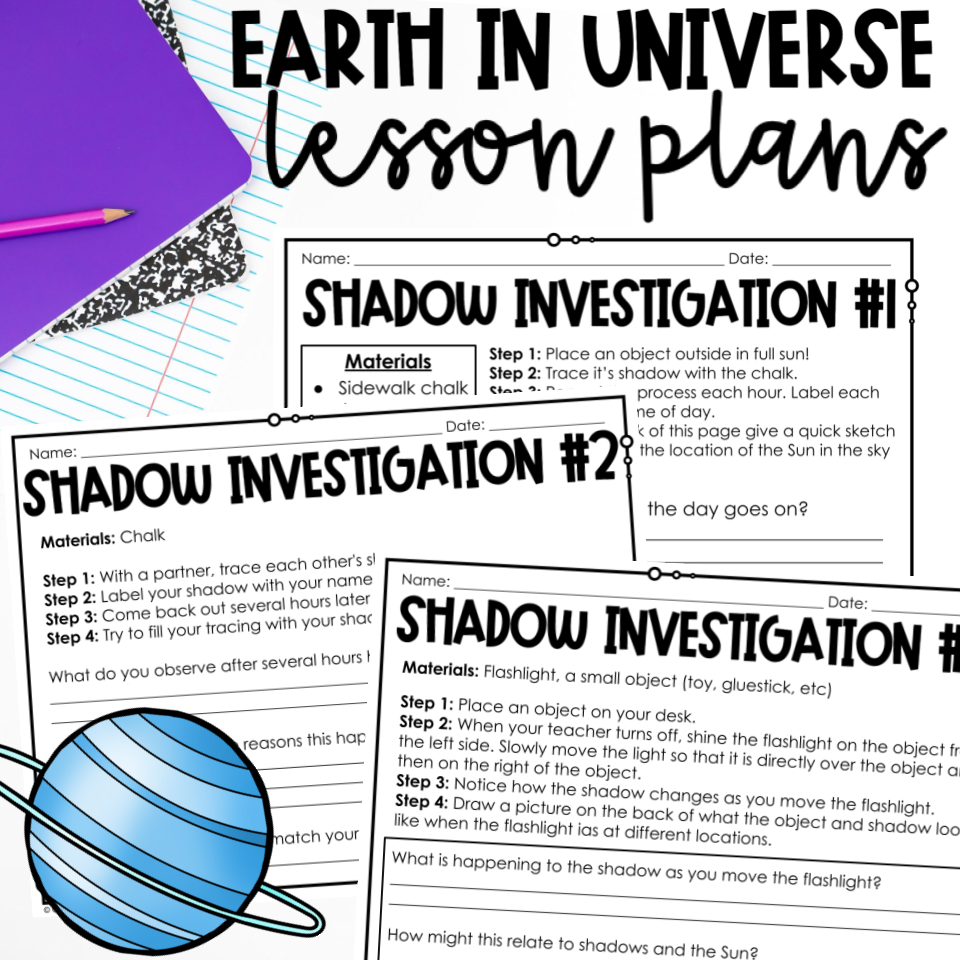
These activities are part of our 3rd Grade Earth’s Place in the Universe Lesson Plans, which include detailed lesson plans, investigations, projects, and many other activities to help students understand shadows and the Sun. Then include student instructional cards for each of the activities above so you can just print and provide them to students.

*As an Amazon Associate, we earn from qualifying purchases.

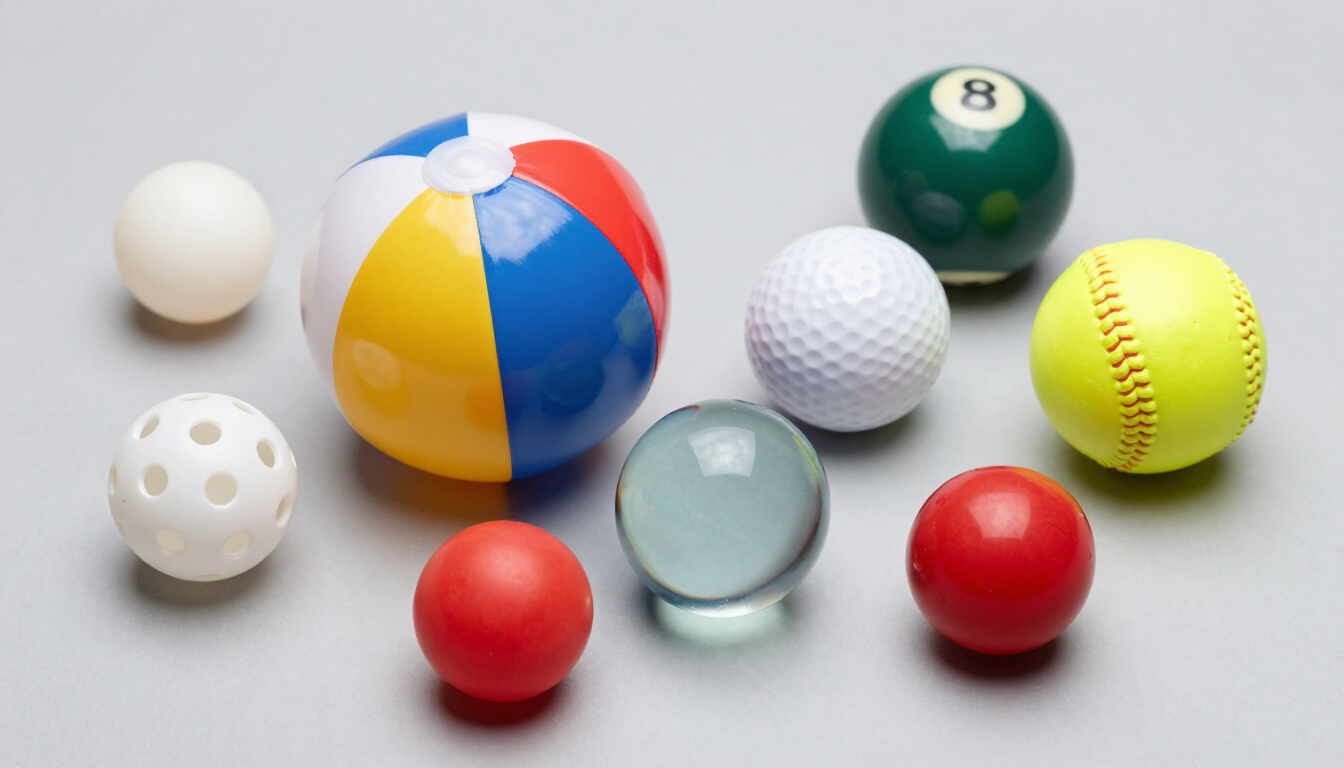
Variety of balls used in a hands-on force and motion investigation exploring how mass affects an obj
July 6, 2026
Teach force and motion with hands-on science activities that explore how force strength and mass affect movement using simple materials.
Coin resting on an index card over a plastic cup for a hands-on Newton's First Law of Motion
July 6, 2026
Teach Newton's Laws of Motion with quick, hands-on science activities using simple materials. Perfect for engaging elementary students.
paper airplane for activity demonstrating how air resistance affects flight
July 6, 2026
Teach air resistance with this no-prep science investigation! No materials required—just an engaging, hands-on activity for elementary students.
Students investigate gravity by testing how different ramp angles affect the motion of a toy monster
July 6, 2026
Teach gravity with two low-prep science investigations using everyday classroom materials. Perfect for engaging elementary students with hands-on learning.
See a student creating a Creature Family Project to demonstrate inherited and acquired traits.
July 2, 2026
Discover engaging projects for teaching inherited and acquired traits. Hands-on activities help students explore heredity through creative, standards-aligned learning.
Imageofastudentmakingamodelofthesolarsystem
June 30, 2026
Learn how to make a solar system model that helps students understand planet order, orbits, and key space science concepts through hands-on learning.
Studentsworkingonhexagonalthinkingstrategy
June 30, 2026
Discover the hexagonal thinking strategy and learn how it helps students make meaningful connections, build critical thinking, and deepen learning across subjects.
Students working in a classroom on reading skills.
June 20, 2026
Guess the Topic is a simple pre-reading activity that builds background knowledge, vocabulary, and curiosity while getting students talking before they read.
Students investigation the force of gravity by dropping objects.
June 19, 2026
Make gravity fun with quick and easy investigations! Explore hands-on science activities that help kids discover how gravity affects motion.
Students participating in hands on demonstration to show their families.
June 19, 2026
Host a Motion Museum with engaging force and motion exhibits! Explore hands-on science activities that make physics concepts fun and interactive for kids.