These activities are part of our 3rd Grade Earth in the Universe Lesson Plans, which include detailed lesson plans, projects, assessments, and many other activities to help students understand the space, stars and shadows.
Model of the Solar System
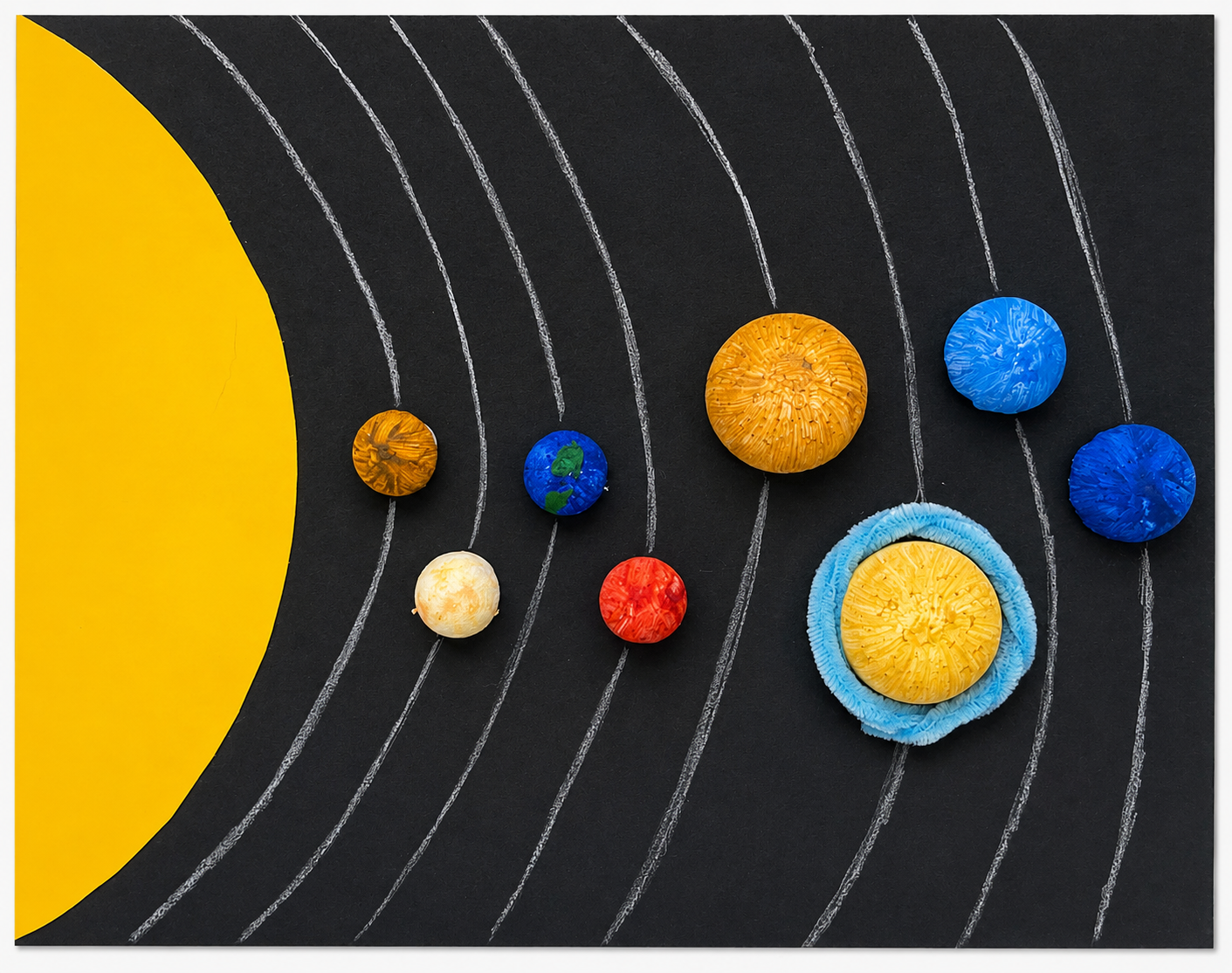
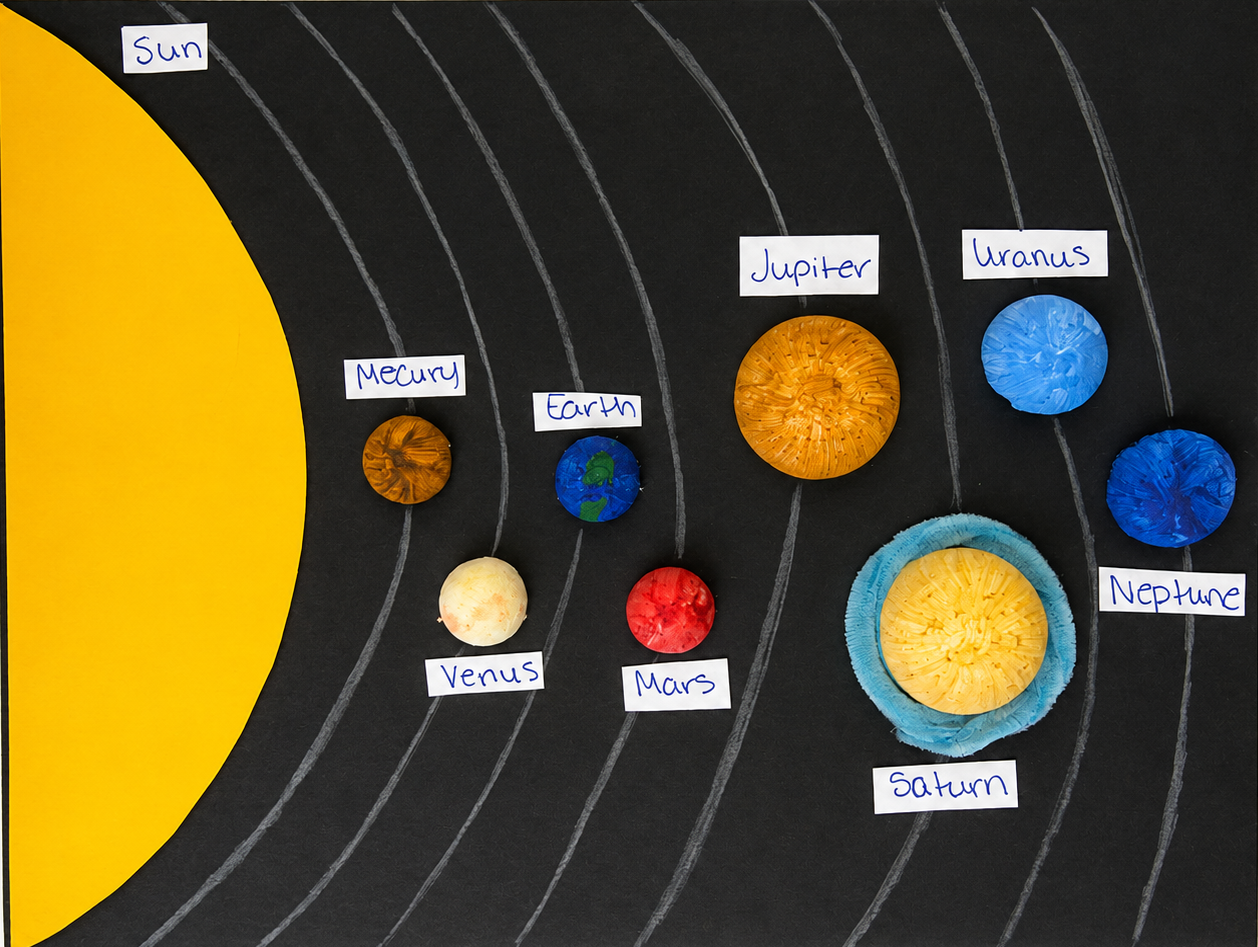
It seems like every student builds a model of the solar system at some point during their education. But having students build a model of the solar system can seem daunting! Here is a simple but impactful solar system model students can create to demonstrate their understanding of the solar system.
Model of the Solar System
Time: 1-2 hours
Materials:
- Styrofoam balls of various size (cut in half)
- Paint and paint brushes
- Black or blue paper and yellow paper
- White Glue
- White colored pencil
- White paper
- Scissors
Steps:
- Paint the styrofoam balls to match the colors of the planets. Consider allowing students to look up what these planets look like.
- Cut yellow construction paper to look like a sun and glue it to the black/blue construction paper.
- Draw white lines to represent the orbits the planets follow.
- When the planets are dry, glue them to the black/blue paper.
- Finally, using white paper create planet name labels and glue to the black/blue paper.
Faces of Humanity
Portraits of people from around the globe
Sands of Time
Stark beauty of desolate dunes
Beyond Boundaries
Visual odyssey across continents
Students will demonstrate they understand:
- The Sun is at the center of our solar system.
- The planets orbit the Sun.
- The planets are arranged in a specific order.
- Earth is the third planet from the Sun.
- Models have limitations like not being able to show actual sizes and distances accurately.
Alternatives
To encourage creativity and critical thinking we suggest you don’t give all these steps to students. Give them the materials and the task and let them decide how they want to represent the solar system. You can give students additional supplies like clay, pipe cleaners and more to encourage different types of models
FAQ
What materials did you use?
Before spending your own money, know that the exact materials listed are not required. Similar items will work just as well! We just wanted to include links to products we've had positive experiences with in case they're helpful as you gather supplies.
- Styrofoam balls of various size* (because you cut them in half, they can be used for 8 students)
- Paint* (students need such a small amount, a group of 6 student could share this set)
- Paint brushes
- Black or blue paper and yellow paper
- White Glue
- White colored pencil
- White paper
- Scissors
Any alternatives to using styrofoam balls?
If styrofoam balls are not available here are some alternatives:
- Paint or Construction Paper (will make it 2D only)
- Air dry clay or Play-doh™
- Balloons (will require more space)
- Bottom half of an Easter Egg (doesn’t allow to show size difference)
What tips can make this project easier?
- Cut the styrofoam balls ahead of time. Ask families if someone can volunteer to do this.
- Have students stick their styrofoam balls on a toothpick to make painting easier.
- Give students a paper plate to place their wet planets on to dry.
- Draw rings before gluing planets.
What prior knowledge should students have?
For all of this project students should have learned the concept already. This project is to demonstrate their understanding of what they have been taught. If you follow the 5E instructional model these activities would come after the "Explain" section. Interested in what the 5E model is:
get my free guide here!
*As an Amazon Associate, we earn from qualifying purchases.

Learn how reducing classroom downtime, shortening transitions, planning for early finishers, and having quick backup activities can help prevent behavior problems.

Discover a simple way to teach weather by tracking and graphing daily conditions, using real-time data to build vocabulary and science skills.

Explore matter, physical and chemical properties, and chemical changes with an exciting elephant toothpaste science experiment for kids.

Discover how science scavenger hunts make hands-on learning easy and engaging, with simple activities for exploring matter, forces, and more.

Try the Stroop Effect for kids! This fun brain experiment explores attention, the nervous system, and how our brains process competing information.

Closed sorts vs. open sorts: discover how both strategies help students classify, identify patterns, explain their thinking, and develop deeper science reasoning.
Teach friction with this engaging investigation! Students compare toy car speeds on ramps covered with sandpaper, bubble wrap, and aluminum foil.

Looking for a meaningful ecosystem project? Learn how to host an Ecosystem Expo where students research biomes, create displays, and present their learning.

Discover hands-on human body system projects that help students explore the skeletal, muscular, digestive, respiratory, and more using simple craft supplies.
Teach force and motion with hands-on science activities that explore how force strength and mass affect movement using simple materials.