Guess the Topic: A Pre-Reading Activity to Build Background Knowledge
Most educators know the importance of background knowledge when reading. Background knowledge allows students to make connections from already known information to new information. Sometimes it can be easy to forget the importance of pre-reading activities before reading a text. Below is an easy to implement idea to support students' background knowledge before they read a text.
Guess the Topic
Time: 10 Minutes
Materials:
- Text
- Index Cards
Steps:
- Select key words or images from the text students will read.
- Place each word or image on an index card. If possible select enough words or images from the text to equal the number of students in your class. If that is not possible you can duplicate words and images.
- Distribute one card to each student.
- On the back of the card students will write what they think the text will be about in a complete sentence.
- Then they will find another person in the class and share each other's words/images on their cards. Together they will use the two clues to write what they think the text will be about.
- Both students will find new students to compare cards with . Again they will share each other's words and/or images and will write down what they think the text will be about.
- Students continue this until time is up (about 3 minutes). The more cards students can share with each other the more specific their topic becomes.
- Students will then return to their seats and the teacher can facilitate a discussion about what they think the text is about.
- Then students will read the text independently and complete any comprehension activities related.

Extension:
After reading and completing any extension activities, students can return to their class conversation to see if the topic they had come up with was accurate. Discussion questions the teacher can ask include:
- How close was your guess was to the text?
- What information did you have that helped you guess the correct topic?
- What information did you NOT have that would have helped you make a better guess?
- What new information did you learn from your peers?
- What new information did you learn from the text?
How this might look in a classroom:
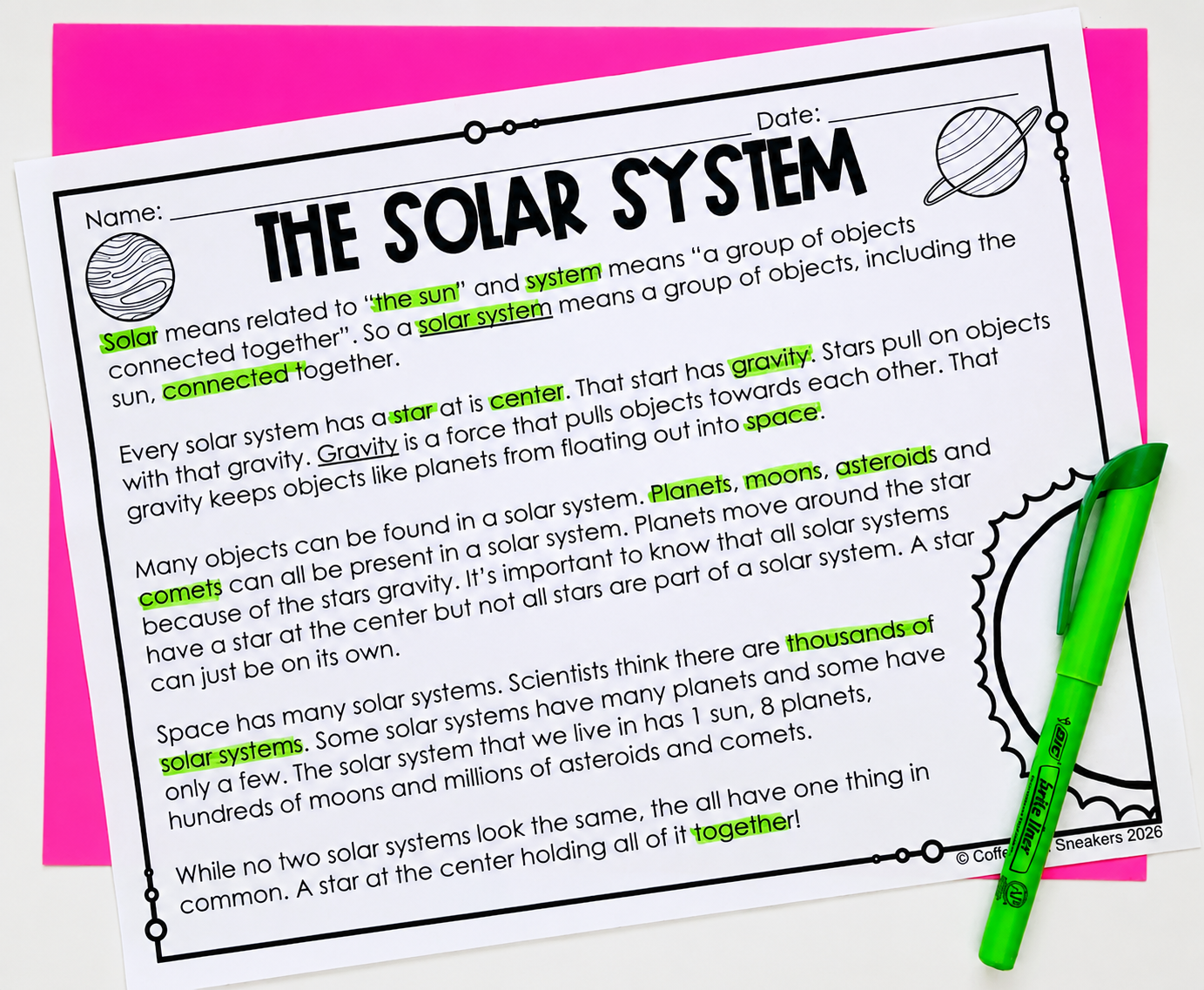
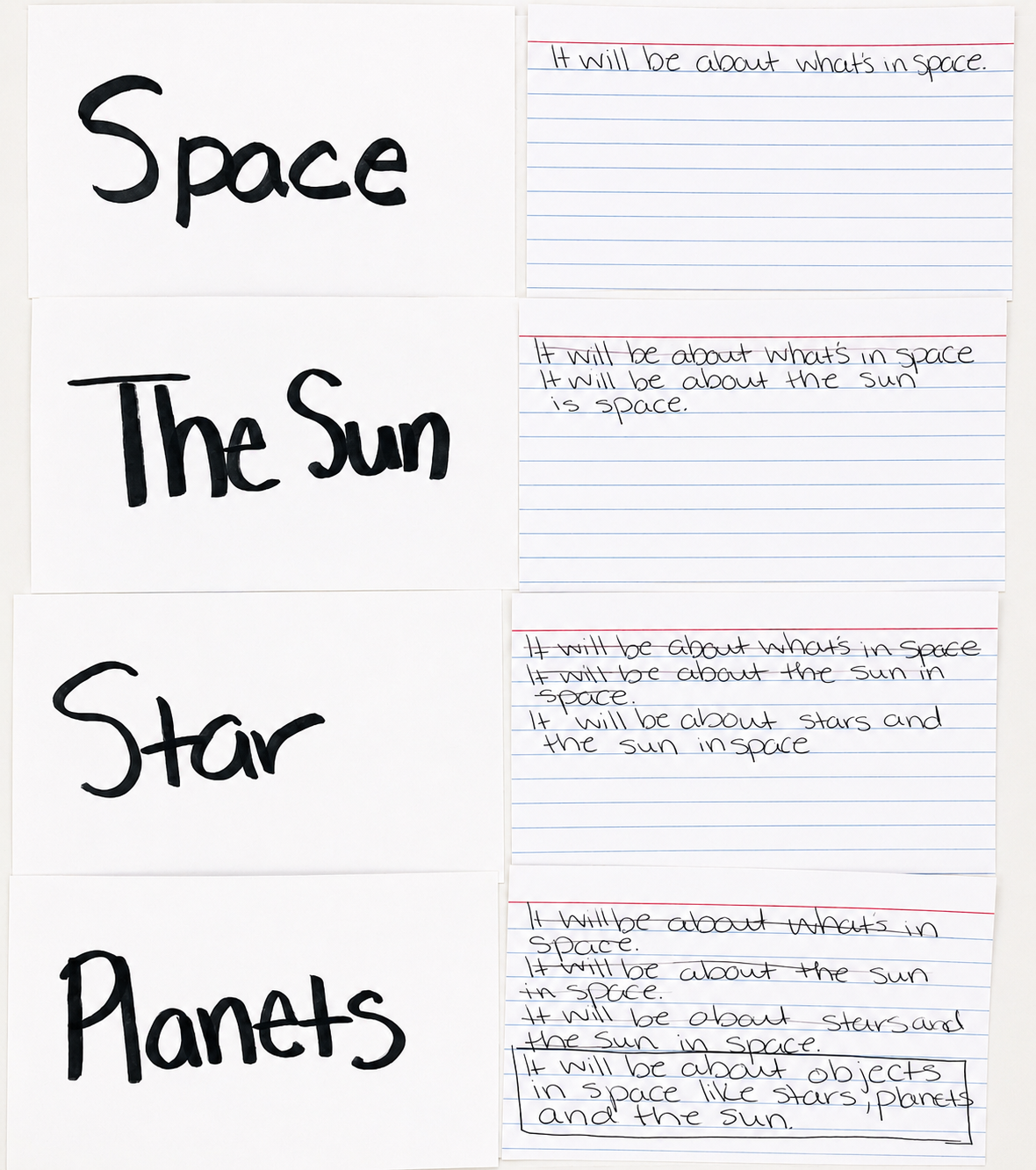
A teacher passes out cards that are related to a text that is about the solar system. A student named Aiden had “space” on his card. Then he met with a student who had “Sun”, then a student who had “star” and finally with a student who had “planets”. As Aiden got more information from other students he was able to narrow down the topic of the text.
Space - It will be about what’s in space.
Sun - It will be about the Sun in space.
Star - It will be about stars and the sun in space.
Planets - It will be about objects in space like stars, planets and the Sun.
When students returned to their desks and had a class discussion about what they thought the text was about, Aiden mentioned to the class that our solar system has eight planets that orbit around it. Half of the class did not know this information so Aiden helped to build their background knowledge on the topic before everyone started reading.
Students read the text and answer comprehension questions. The students returned to their original classroom conversation and compared their guess of the topic to what the text was actually about. Aiden stated his guess “It will be about a star in space, called the sun, that is surrounded by planets” was close but because he never saw the word “gravity” he didn’t know the text would be about how the sun has gravity and holds all the objects together in the solar system. He also states that another student taught him that moons orbit planets not the sun and from the text he learned that not all stars have planets.
Benefits of this activity:
- Activates background knowledge
- Builds vocabulary
- Forces prediction and inference
- Pushes academic conversations
- Easy to implement with little resources
Pre-reading shouldn’t just be about reading the title and looking at the pictures ahead of time. Students can complete a more in depth and rigorous pre-reading activity with just a little time and few resources. Try
Guess the Topic for your next reading activity and be amazed how students build background knowledge, vocabulary and curiosity in less than 10 minutes!
Discover more teaching strategies in the Coffee and Sneakers Learning blog.
Or have the classroom-ready ideas delivered straight to your inbox by joining the
Coffee and Sneakers newsletter. You’ll receive teaching tips, exclusive free resources designed to save you time and engage your students.