I personally prefer to teach students how to function independently in the classroom. I have all my supplies setup and accessible for students. I use a 10 drawer cart, with each drawer clearly labeled with materials. On top of the 10 drawer cart is paper: lined paper, graph paper and computer paper. On the black shelves with fabric drawers are the extra supplies that I will use for the entire school year. This allows me to put a specific amount of expo markers, sticky notes in the 10 drawer cart while not putting out the entire years worth of school supplies all at once. Students know they may not go into fabric containers unless they have permission. The nice part about these drawers is they come all the way out. So I can have a student take out the scissors drawer and pass them out to everyone (if the whole class needs them).
10 Classroom Setup Decisions You'll Thank Yourself for Later
Are you determined to have a smooth running classroom this year? Then you will need to dedicate time to not only setting up your classroom; but ensuring it is set up in a way that allows students to focus on learning and allows you to focus on teaching. Here are 10 things to consider when setting up your classroom.
1. Student Desk Setup
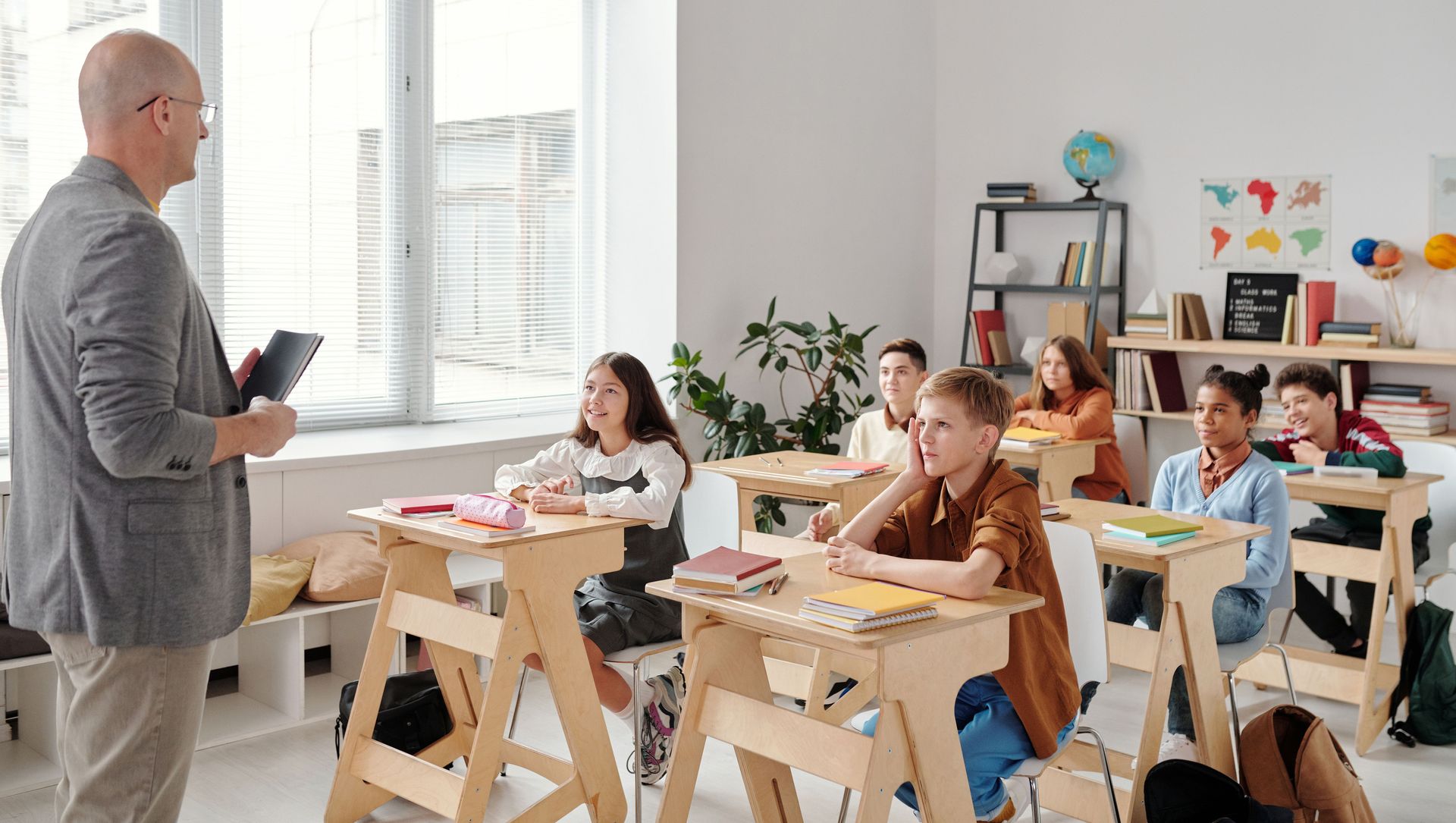
The very first thing you need to start thinking about is how the student desk will be setup. How you set up your students desks will dramatically change not only the flow of the classroom but how your students interact and work together.
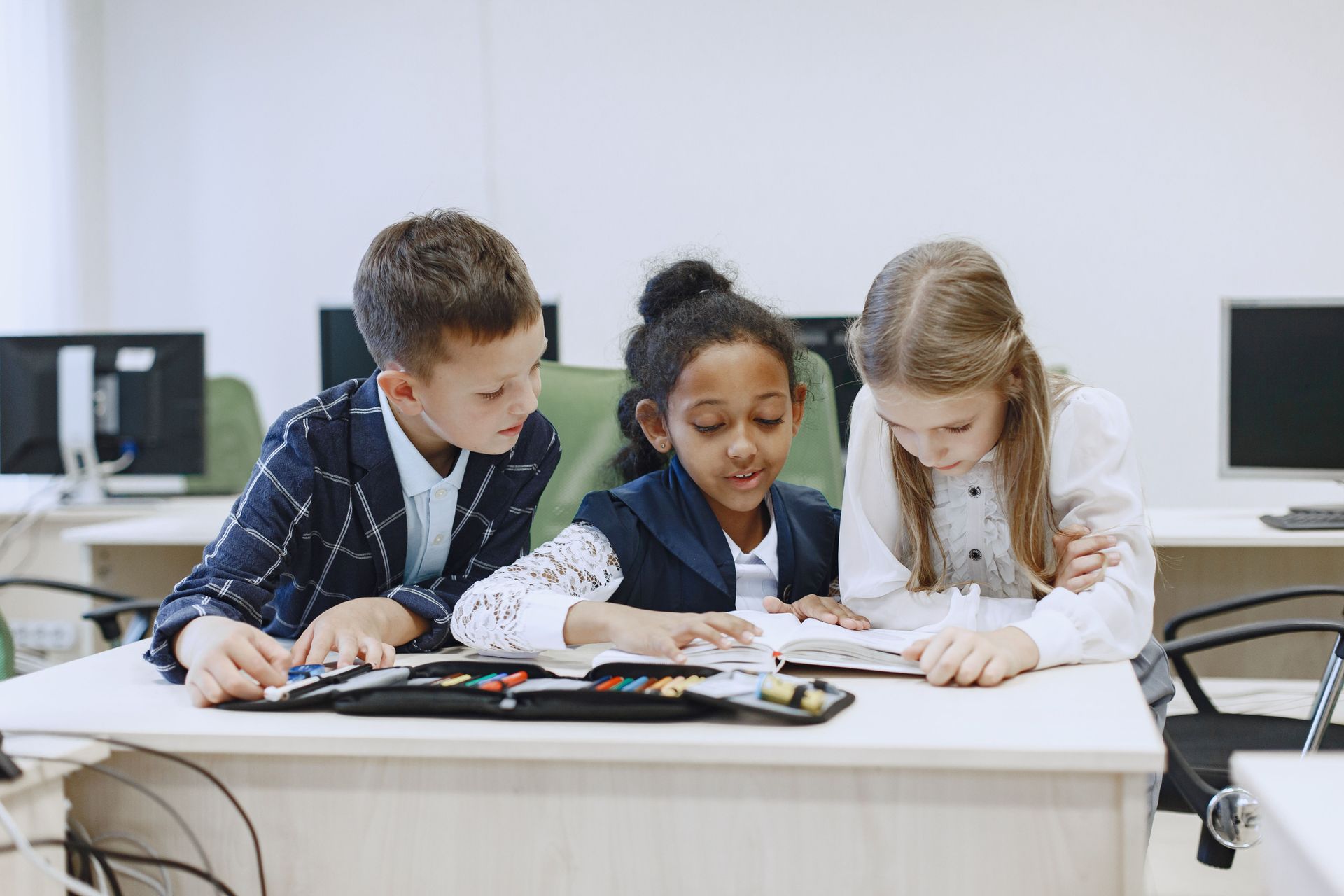
Students in groups of four is ideal. It allows students to work together in a small group during specific types of instruction. It also allows students to learn from each other and learn how to cooperate in a group. Sometimes the math doesn’t workout to create groups of 4. You may have to adjust to have 3-5 in a group. I avoid ever having groups of 6+ (if I can). Six students in a group inevitably leads to 1-2 students who get left out of group work and rely on others to do the work for them.
If you have a choice at your school I recommend desks instead of tables. I know tables are nice because the allow space for students to work and they don't move around the same way desks do. However, there is little flexibility with tables. With desks, if a student needs to work independently on a task they can move their desk and rejoin their group later.
2. Small Group Table
Where you put your workspace is just as important than where your students will sit. For my small group table, I have my table close to two things: the board and supplies (gluesticks, scissors, etc). I want to be close to the board because there there are times I need to use the board in my small group instruction. I also like to be close to supplies. Small group plans can change in an instant based on what I notice. Being close to supplies allows me to adjust my plans and have access to anything we might need.
3. Classroom Flow
How your classroom flows is very important. Students need access to many things in a classroom: materials, computer, headphones, nametags, bookbags, lunches, supplies, notebooks, etc.
All of these places that students might need to go to need to be far from each other. It might seem like it would make sense to have one designated area for everything, but imagine 3, 5, 10 students all up out of their seat turning things in, getting supplies, returning materials. That could be a lot of students all in the same location. This leads to lost time because they have to move around each other or wait on each other.
Instead, I put these major places in separate locations. All technology (computers and headphones) are in the back of the classroom. Supplies like scissors, gluesticks, paper and pencils are on a separate wall from where our technology is. Finally, a bin where students should turn in materials should be in another separate location. By having three distinct areas where students can access their materials you will have less congestion and less student congregation. Which allows students to get what they need quickly.
Speaking of turning in assignments, one of the best things I accidentally did was to have your turn in bin by the exit of the classroom. I have students hold on to their completed assignments until it’s time to transition. For example, students have been working in math and have 2 assignments to turn. They hold on to their completed assignments until it’s time to go to lunch (which is after math). They line up at the door to go to lunch with their completed assignments. As they walk out the door they drop their assignments in the completed in bin. This limits lost instruction and students out of their seats.
4. Flex Space
If possible I highly recommend having some kind of flex space in your classroom. This can be something as simple as a table that holds 4-6 students. I like to have flexible table in my room because you never know when someone might need it. It could be a student who was absent who needs to complete a test from the day they were absent. Or maybe you have a lead teacher who is going to come in your classroom to work with some students who need some extra support. Need to create a custodian appreciate day banner, put it on the table to have students create. In all my years I have never regretted having a flex space to be used for whatever was needed.
5. Storing & Managing Supplies
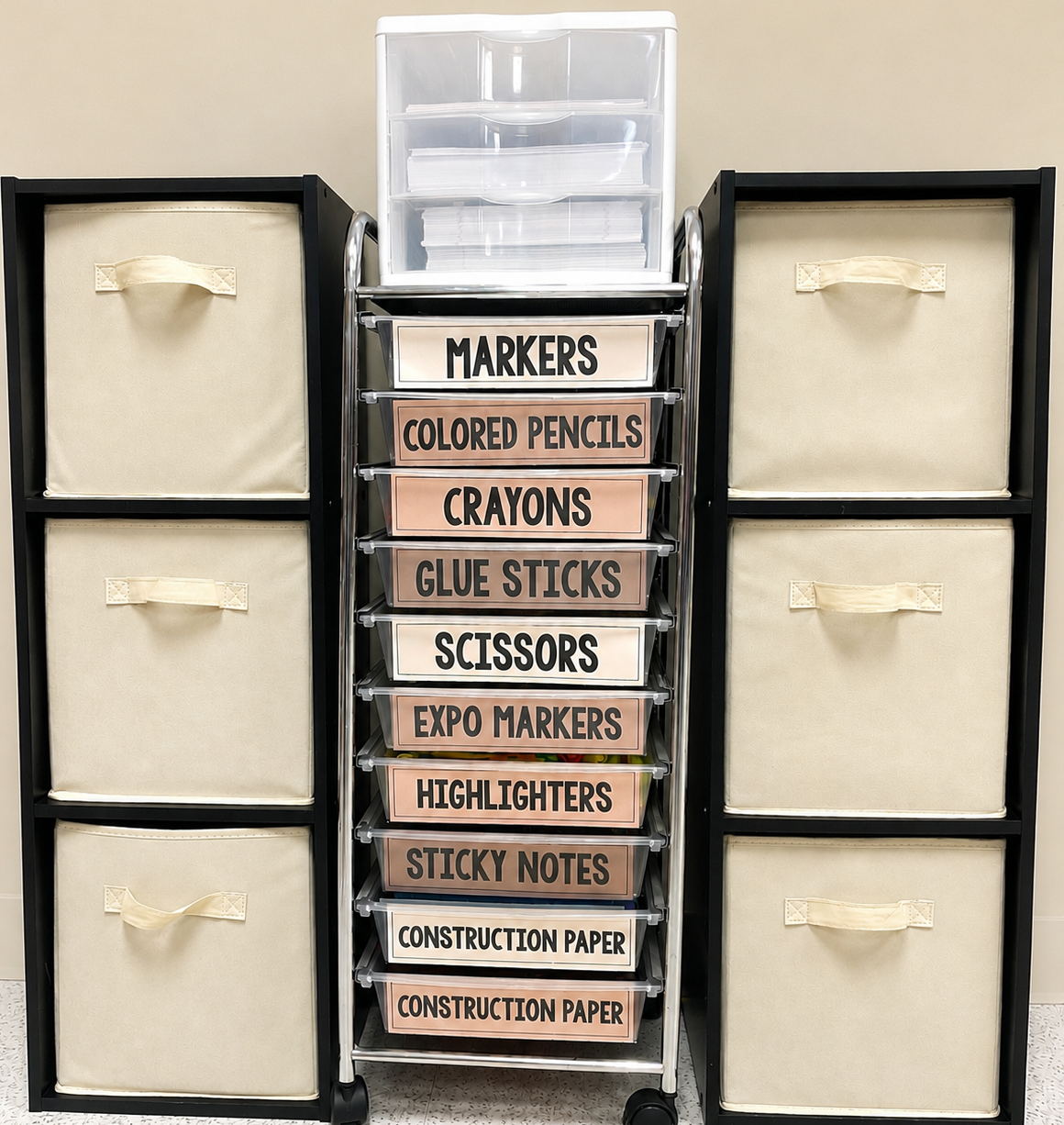
Below are links to the items in this photo. Please don't feel like you need to buy the exact products we've linked—there's a good chance you already have something that will work just as well! These links are simply here as a convenience. As an Amazon Associate, we earn from qualifying purchases but if have something already, save yourself some money and make it work for your classroom.
6. Assignments & Center Work
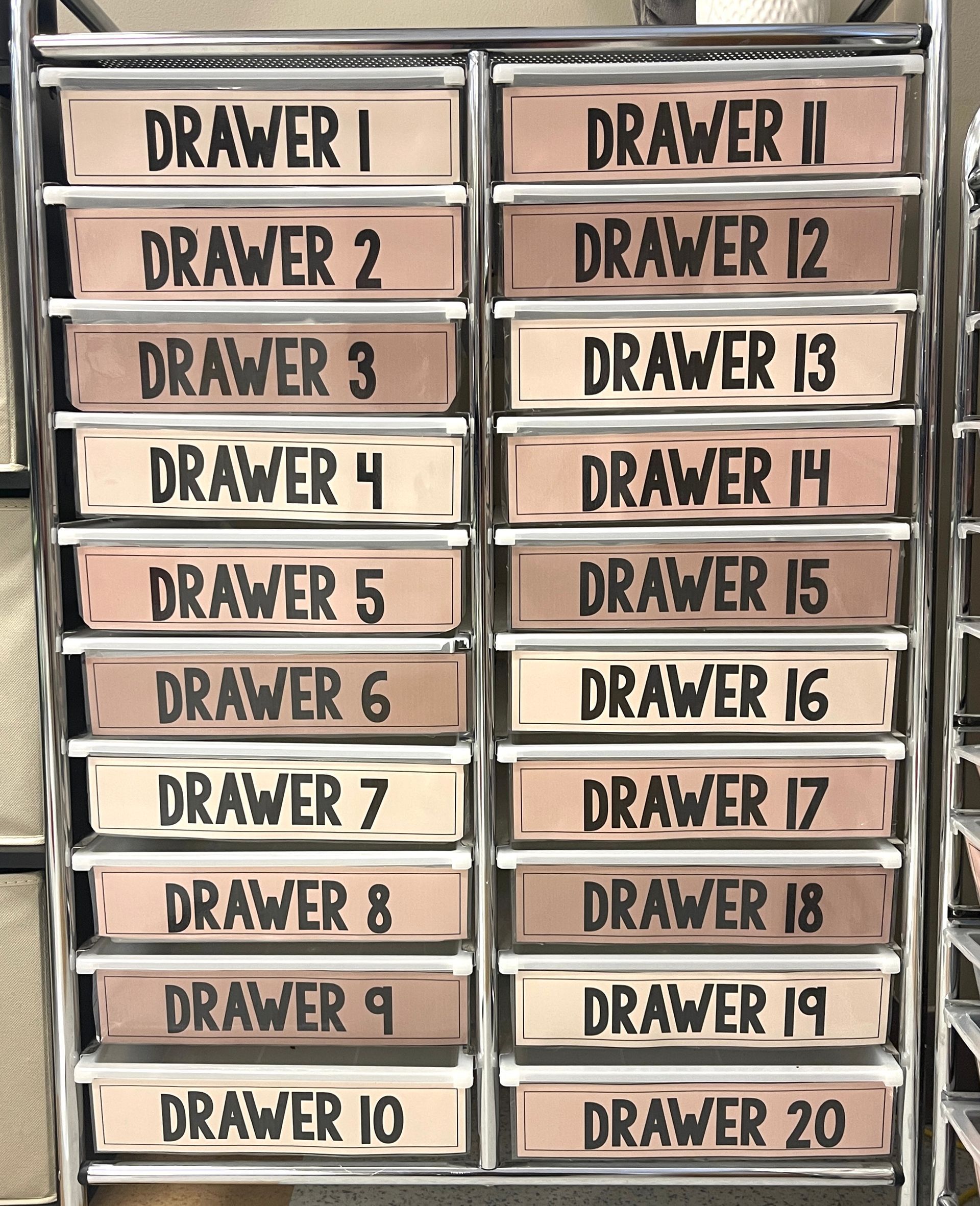
Here is another organizational tip for teaching students independence and help you stay organized. This is a 20 drawer cart that I started to use for my math centers. On the board it might say something like:
- Everyone - Exit Ticket from drawer 1
- Group A - Math Facts Game from drawer 2
- Group B - Math Word Problems from drawer 3
- Group C - Math Puzzles from drawer 4
I originally created this cart a way to differentiate assignments. It ended up being so helpful to manage all the papers and materials. I would the worksheets in the drawer with any materials (manipulatives, dice, playing cards, etc) that might go along with it.
Here is the link to this 20 drawer rolling cart*. Again, do not feel like you need to purchase this exact product. Check with coworkers or social media to see you can find one used or a similar product. You also don't need 20 drawers, I've used 10 drawers in the past and made that work.
7. Bulletin Boards
Some teachers really enjoy decorating and updating the bulletin board regularly. I am not one of those teachers. After a few years of teaching I decorated my bulletin boards to be generic so that I could either leave them the same all year long or make minor adjustments. For example, when I had two bulletin boards one board was designated as logistical information: daily schedule, class birthday list, specials schedule, etc. The other bulletin board said something like “Look what we are learning” and I would but my anchor charts that were needed for that time period there. You could could also use bulletin boards for multiplication charts, vocabulary words, sound walls, etc. If you are a teacher who truly enjoys switching out your bulletin board regularly, more power to you! But if you don't want to worry about it, just put up paper, border and some generic terms like "Currently Learning", "Today's Plan" or "Check this Out".
8. Backpacks & Lunch Boxes
Let's talk about where students will store their belongings during the day. The benefit to backpacks on chairs is that students have access to their belongings all day. The downside, they take up a lot of space and can get in the way when students are moving around the classroom. I recommend having a designated place in the classroom for backpacks. Cubbies are great, but if that is not an option, neatly lined up against a wall will do as well. I’ve also seen teachers use very large plastic containers to hold their students' book bags.
If you are on a departmentalized team you will need to discuss whether students should bring backpacks to their next class or not. The easiest way to decide this is if the students will be returning to their class before dismissal. If yes, they can keep their backpacks in their room. If not, they will need to take their bag with them.
To limit students needing to bring their lunch or return it to their other classroom I had a plastic tub outside the classroom that students put their lunchboxes in in the morning. Then when they are leaving for lunch they can grab their lunchbox out from the hallway instead of trying to go back into the classroom - reducing a lot of unnecessary movement.
9. Water Bottles
If not managed well, water bottles in the classroom can be very frustrating! The main frustration with water bottles happens when they fall and spill. Some teachers have a designated space where students house their water bottles. However, students will be out of the seat constantly to get water. Water bottles on the their desk is not much better, especially if your students have technology on their desks. My first recommendation is to ask families to choose water bottles that have leak/spill proof lids. If the water bottle tips over it hopefully won’t spill and make a mess or damage computers, papers, etc. If students bring water bottles that leak through the top when spilled, you can ask students with this type of water bottle to place it on a back counter. This will hopefully limit spills. All students with spill/leak proof water bottles can leave their water bottle at their desk.
10. Pencil Sharpener
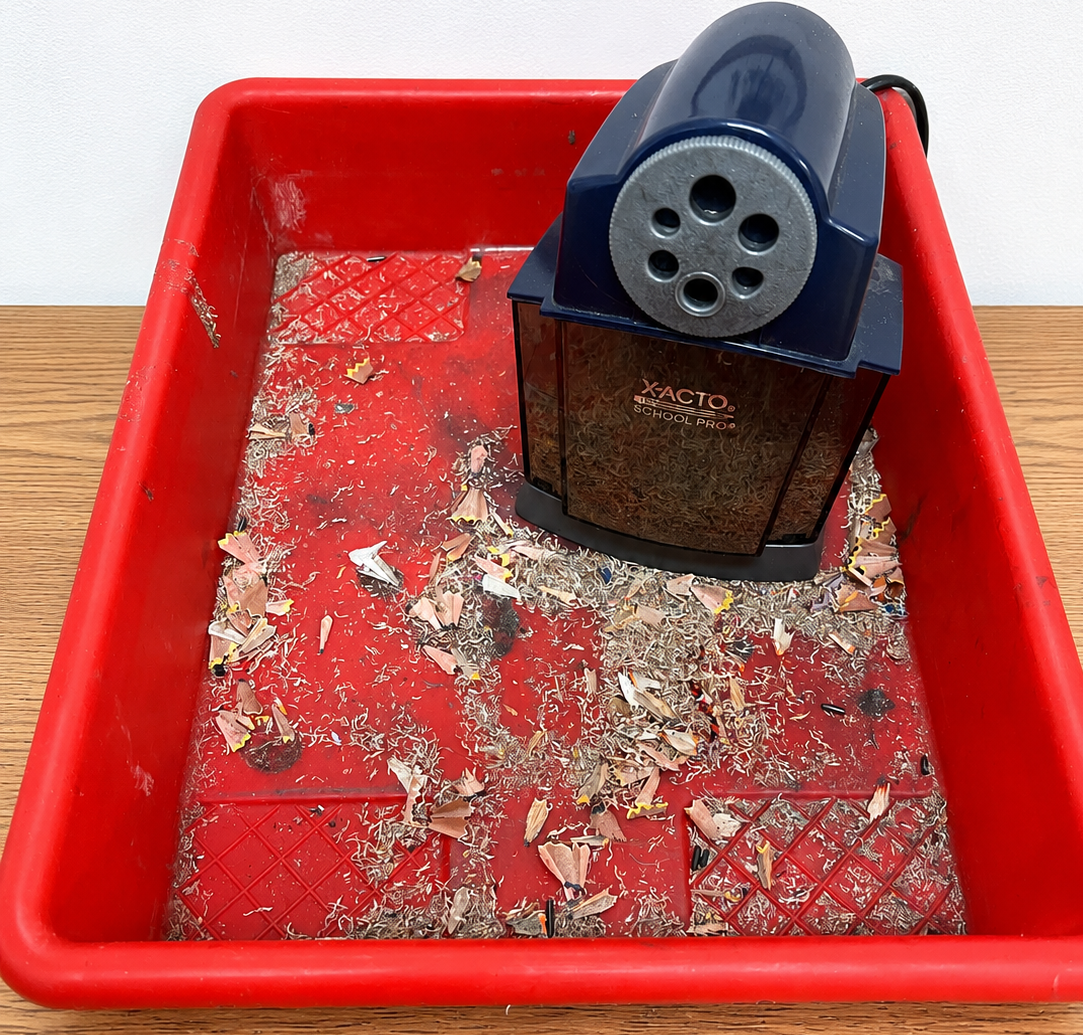
The last tip is about a teachers favorite topic: the pencil sharpener. My only big problem with the pencil sharpener is it can make such a mess! In the past I felt like I was cleaning that area daily. A few years ago I started to place the pencil sharpener in a shallow plastic bin. This allows all the pencil shavings to stay in the bin and not all over the table. The bin could then be easily emptied in the trash and wiped clean with a wipe (if needed). No more pencil shavings o the floor and no more black pencil led marks on the table!
I hope you have found a few tips that will make teaching just a little bit easier for you this year. Discover more classroom tips and teaching hacks here to make teaching easier!
*As an Amazon Associate, we earn from qualifying purchases.