Looking for ready-to-use lessons on this subject? This activity is part of our 3rd Grade Forces & Interactions Lesson Plans, which include detailed lesson plans, student recording sheets, assessments, and many other activities to help students understand forces, gravity and friction.
Hands-On Activity for Understanding Forces
This simple hands-on activity will bring so much excitement to your classroom while showing your students the power of a force.
Adult supervision is recommended for all activities. Parents and teachers should evaluate each activity for the age, ability, and needs of their children. By participating, you assume responsibility for any risks associated with the activity.
Balloon Rockets
Time: 30 minutes
Materials:
- Balloons
- String
- Smoothie Straws
- Tape
- Clothespins
Steps:
- Push the string through the straw.
- Your teacher will help you tape one end of your string to a wall in your classroom.
- Blow up the balloon and hold it closed with your fingers.
- Tape the blown up balloon to the straw.
- Give the end of the balloon a little twist (not a knot) and clothespin the end shut so that it doesn’t leak.
- Grab the other end of the string and walk to another part of the classroom (bring the balloon with you).
- Hold the string taut. When ready, release the clothespin.
- Blow up your balloon a few more times and try it again.
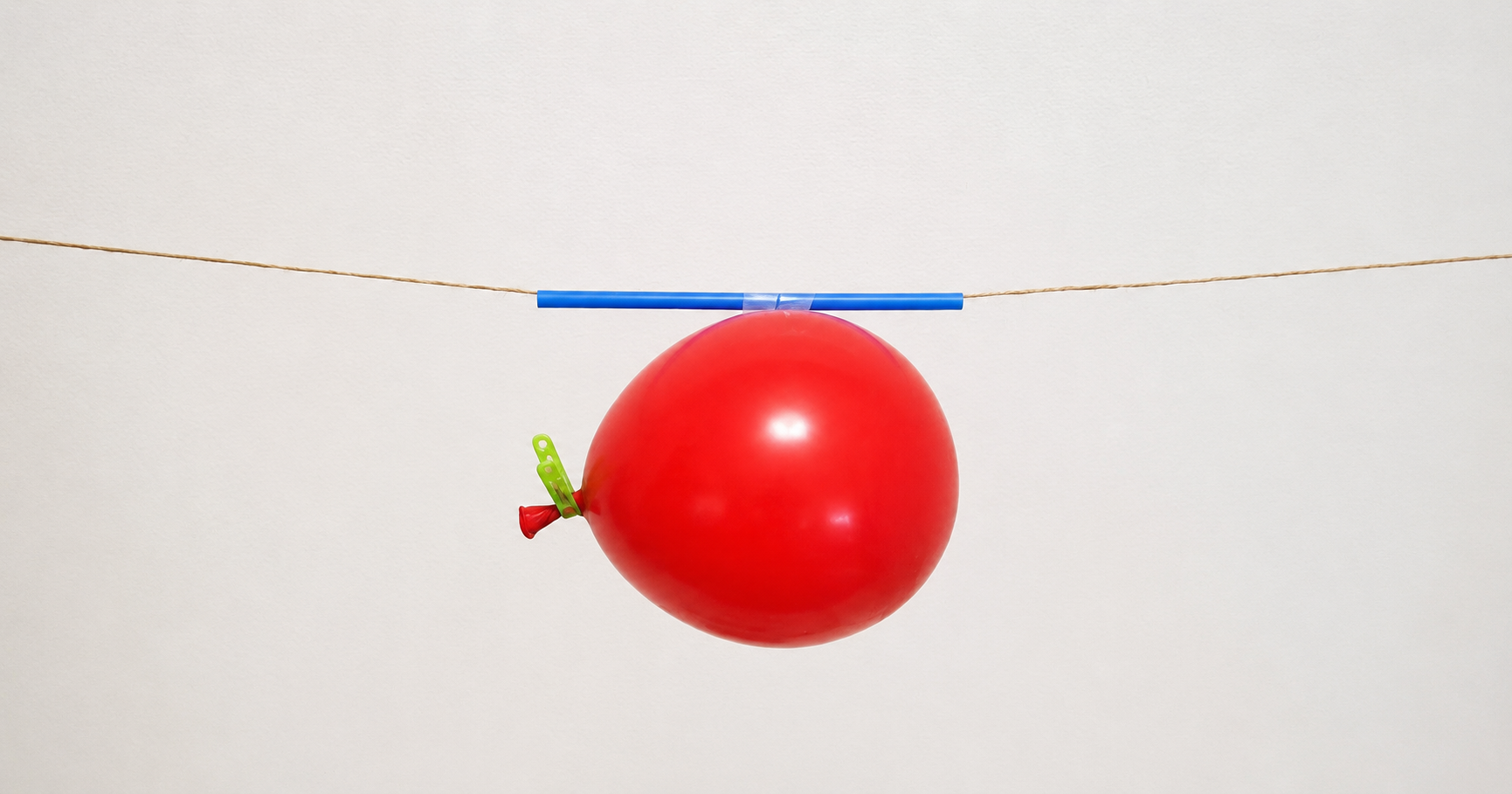
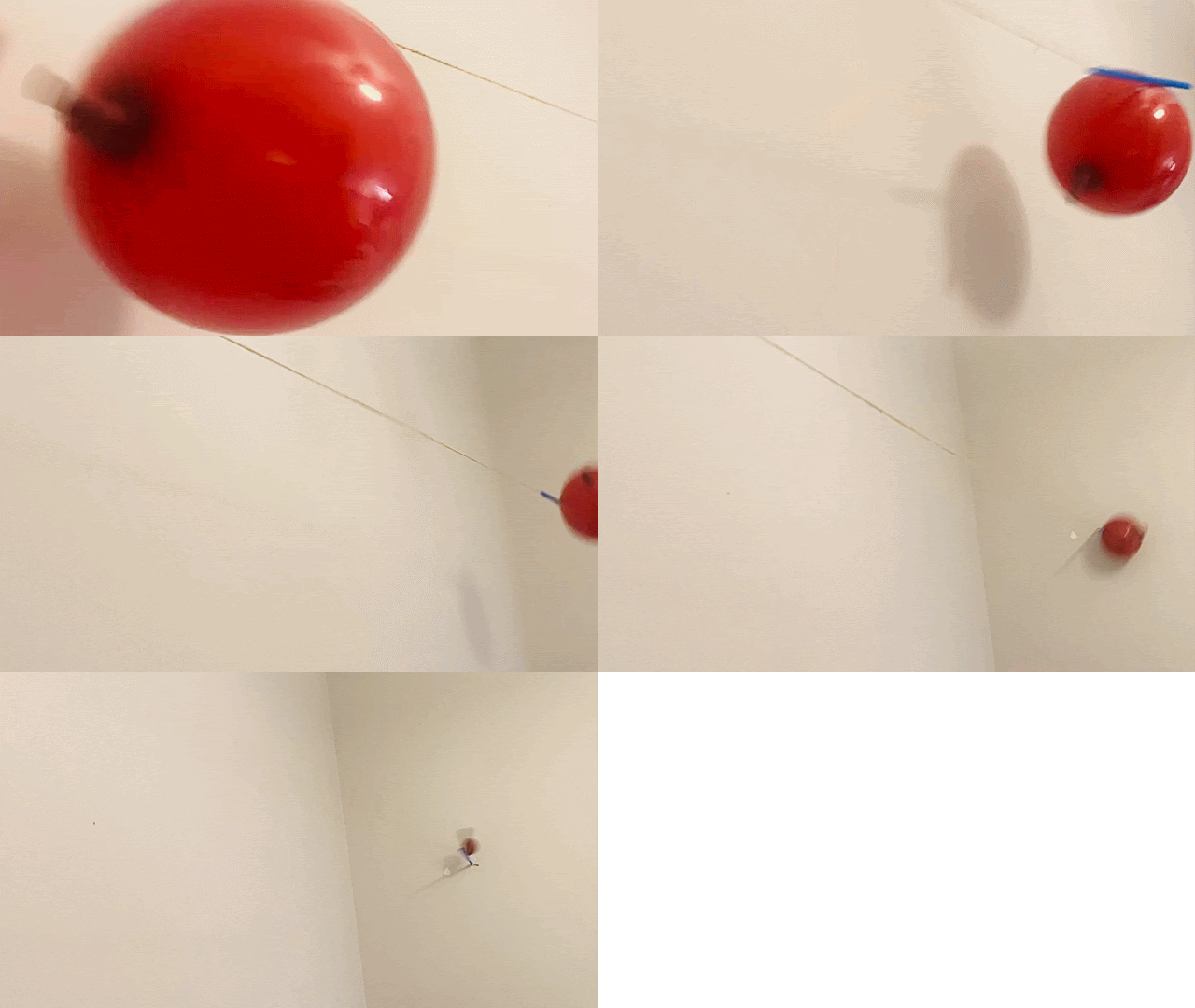
Students will observe:
- When the clothespin is removed, air rushes out of the balloon.
- The balloons moves in the opposite direction as the air.
- The larger the balloon is blown up, the faster and farther it travels.
Scientific Concepts:
- Something (a force) is pushing the balloon forward.
- The greater the force (more air) the greater the speed and distance traveled.
- Movement is caused by forces.
- The air in the balloon is moving in the opposite direction as the balloon.
Extension Activity:
To increase their understanding of forces, students test different balloon shapes and sizes. They can try water balloons and balloons used for balloon animals.
FAQ
What materials did you use?
- Regular Balloons
- Water Balloons
- Balloon animal balloons
- String
- Tape
- Smoothie Straws*
- Balloon Pumps* (not required but very helpful!)
The exact materials listed aren’t necessary—similar items will work just fine! If you’d like to use the same materials we did, consider asking a few families for donations, checking whether your school can purchase a class set, or seeing if colleagues have extras tucked away. The links above simply share products we used and liked, not a required shopping list.
What prior knowledge should students have?
Students do not have to have prior knowledge of forces prior to this activity. After this activity is where you will discuss and teach what is a force and what they do.
What are things I can do during the activity to support learning?
During the activity walk around the classroom asking students questions like:
- What is causing the air to balloon?
- What is coming out of the balloon? (air) What is it doing to the balloon? (moving it forward)
- What do you think would happen if you increased the air in the balloon?
- What do you think would happen if you decreased the air in the balloon?
*As an Amazon Associate, we earn from qualifying purchases.
Discover a simple way to teach weather by tracking and graphing daily conditions, using real-time data to build vocabulary and science skills.

Explore matter, physical and chemical properties, and chemical changes with an exciting elephant toothpaste science experiment for kids.

Discover how science scavenger hunts make hands-on learning easy and engaging, with simple activities for exploring matter, forces, and more.

Try the Stroop Effect for kids! This fun brain experiment explores attention, the nervous system, and how our brains process competing information.

Closed sorts vs. open sorts: discover how both strategies help students classify, identify patterns, explain their thinking, and develop deeper science reasoning.

Teach friction with this engaging investigation! Students compare toy car speeds on ramps covered with sandpaper, bubble wrap, and aluminum foil.
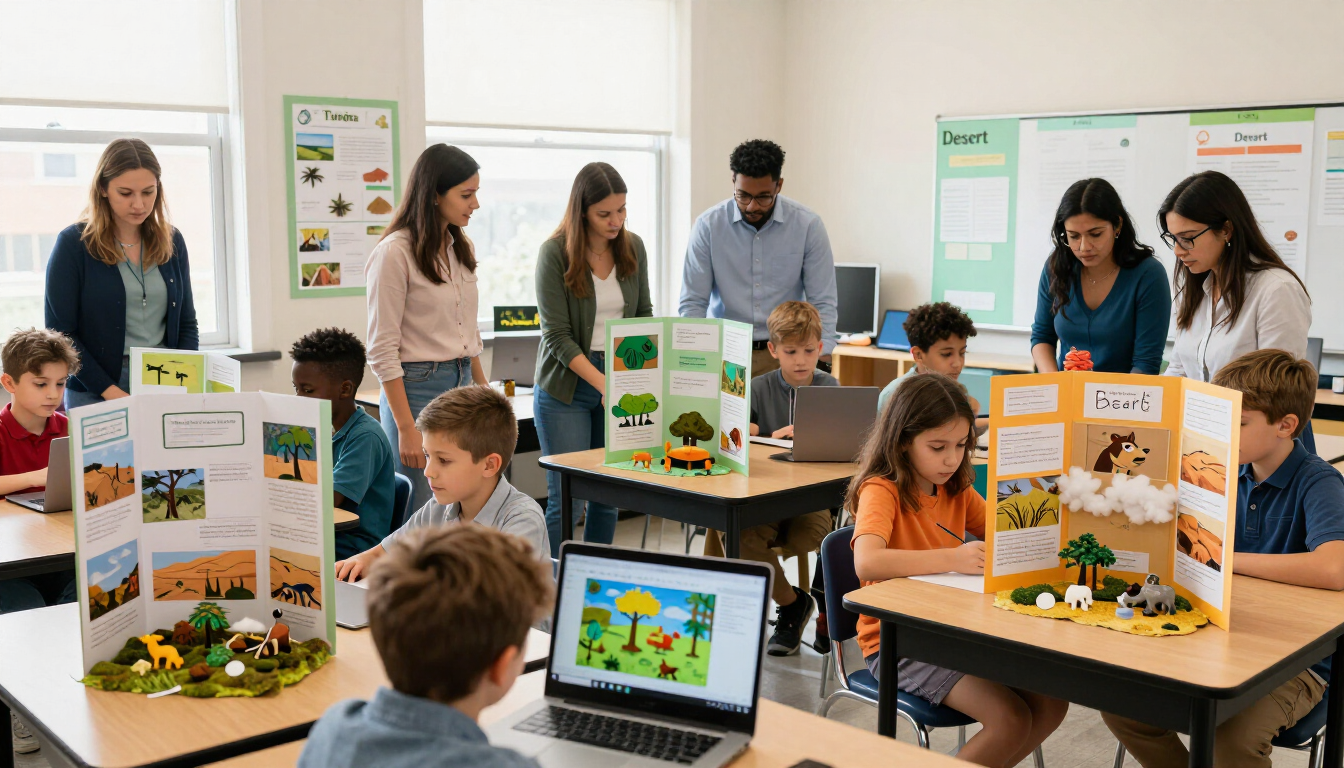
Looking for a meaningful ecosystem project? Learn how to host an Ecosystem Expo where students research biomes, create displays, and present their learning.
Discover hands-on human body system projects that help students explore the skeletal, muscular, digestive, respiratory, and more using simple craft supplies.
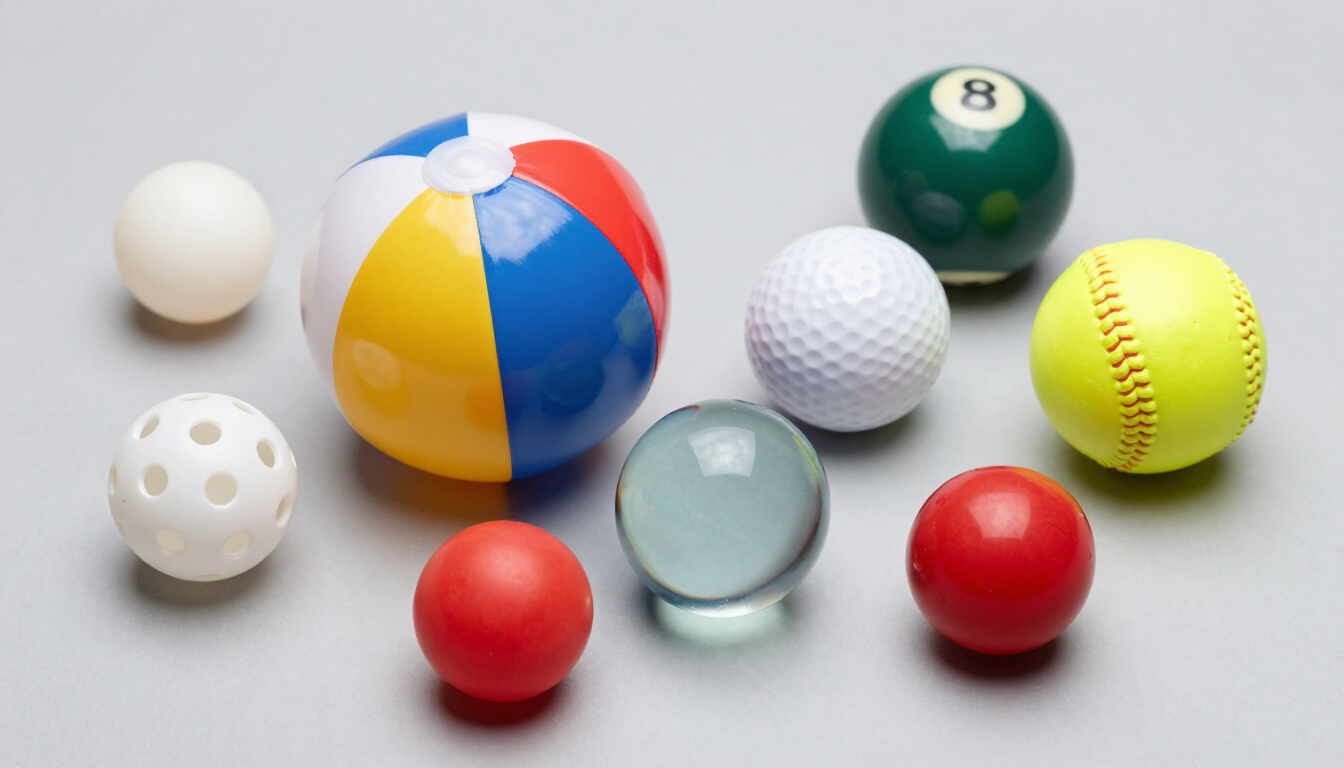
Teach force and motion with hands-on science activities that explore how force strength and mass affect movement using simple materials.
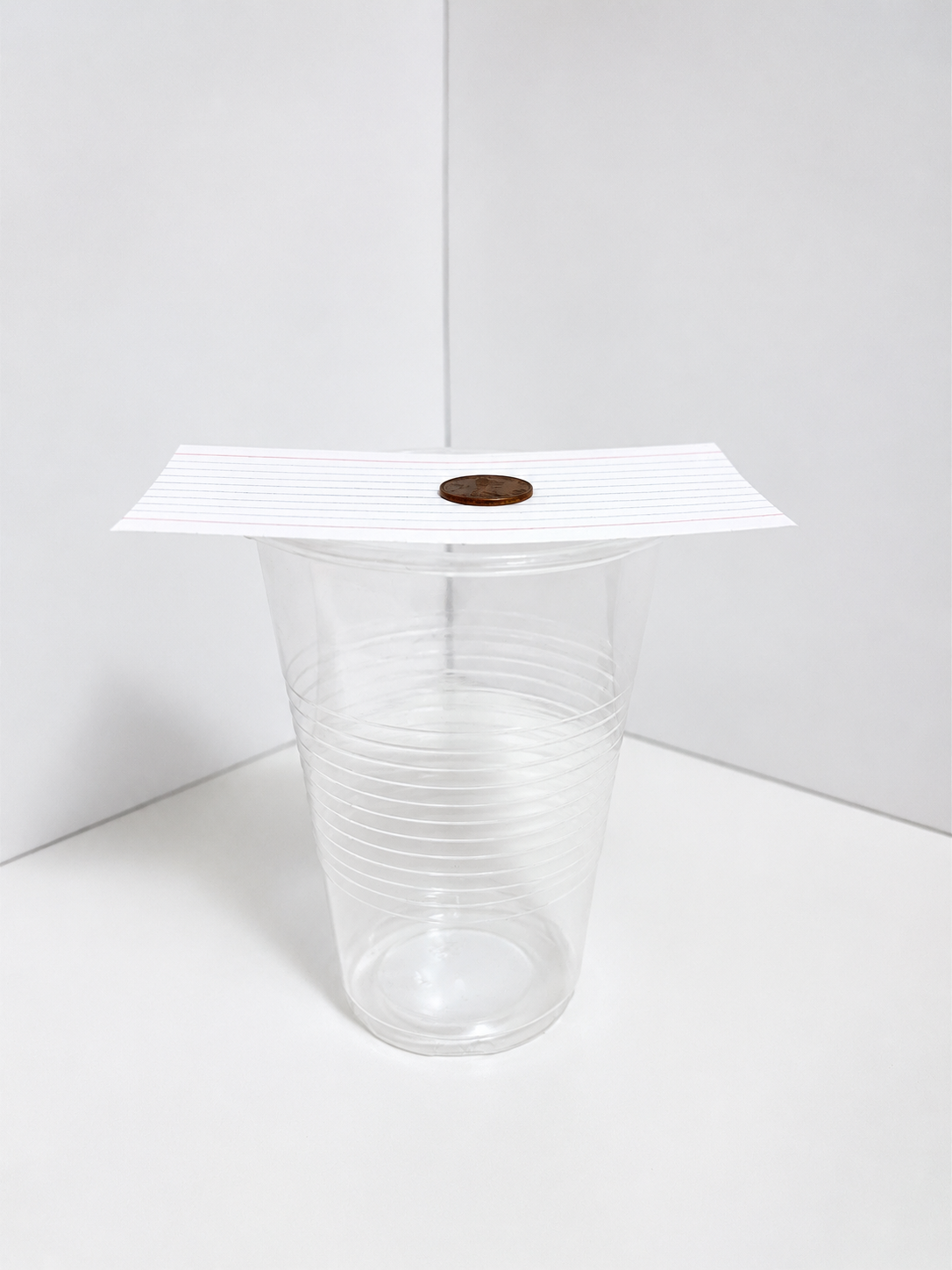
Teach Newton's Laws of Motion with quick, hands-on science activities using simple materials. Perfect for engaging elementary students.